
Chapter 1: What Prayer Really Is
We Desire a Strong Prayer Life
“Man is in search of God.” (CCC 2566)
This deep yearning is woven into the human heart. As Christians, we believe this search isn’t meant to feel like wandering in darkness, chasing after an unknowable God. No, our faith tells us something far more hopeful: God has already taken the initiative.
“God calls man first… [Prayer] is the response to God’s initiative of love” (CCC 2567).
In other words, God is actively pursuing us. Prayer is where that pursuit becomes personal. It is where we encounter the One we’ve been unknowingly searching for. Prayer isn’t just communication, it’s connection. It’s how we fulfill our deepest longing for God and how God fulfills His desire for us.
Most of us would agree with the statement: “Prayer is essential to the Christian life.” Deep down, we believe that prayer is how we connect with the God we believe in—but cannot see. For many, we believe that prayer could offer peace, calm, and meaning in a fast-paced and often confusing world. We hope that it will not only bring us closer to God but also impact our lives and the lives of those we pray for. We carry the conviction that God is pleased when we pray.
Given how positively people view prayer, it’s only natural that we would also desire to know how to have a consistent, meaningful prayer life. One where we truly connect with the One we’ve come to meet. We long for more than words. We want a real relationship.

Why Don’t We Pray as We Desire
We might blame busyness. Distraction. A lack of discipline. We say things like, “I’ll pray later” or “I just can’t focus today.” We hit snooze instead of getting up to pray. We sit down to pray, only to be lured away by the buzz of our phone or the sudden fascination of a crack in the wall. We start strong and end early.
Let’s be honest, there are endless excuses. Let’s not stay there. Instead of rehearsing our excuses, let’s face the truth head-on: Prayer is a battle.
Fighting the Battle of Prayer
The Catechism doesn’t sugarcoat it:
“Prayer is both a gift of grace and a determined response on our part. It always presupposes effort… Prayer is a battle. Against whom? Against ourselves and against the wiles of the tempter who does all he can to turn man away from prayer, away from union with God.” (CCC 2725)
The first battle is simply getting there. Early in the morning, we’ll face the strong urge to hit the snooze button. We’ll be tempted to reason that praying later would be better: “I’ll pray in the car on the way to work,” we’ll say. But somehow, that moment often never comes. The distractions and responsibilities of the day sweep us away before we’ve even begun.
Then comes the second battle: staying there and staying focused. The moment we begin to pray, a thought sneaks in: “I can’t stay here more than five minutes… what am I even going to say or do?” Distractions seem to come out of nowhere and they come fast. Suddenly, everything feels more urgent than prayer. Discouragement follows close behind: “God isn’t listening… He doesn’t seem to care.”
And we haven’t even mentioned the most cunning enemy to our prayer life: our phone. Notifications, messages, the temptation to check “just one thing”—our attention is stolen before we realize it.
Why does this happen?
Because prayer is powerful, the enemy knows what’s at stake and does everything he can to keep us from it. He is well aware that our flesh resists the time and effort it will take. The world lures us to busyness and distraction. The devil deceives us into thinking that prayer is not that important and that we can always do it later.
But here’s the good news: we are not defenseless.
In fact, we are well equipped to fight back. The first step in overcoming resistance is understanding what prayer really is. If we see it as a chore or a duty, of course we’ll avoid it. But if we begin to understand prayer as the place where we encounter God, where we receive His love, His voice, His strength, then everything changes. The second weapon we have is knowing how to sit down and have an extended daily prayer life. It’s easier and more likely that we will do something if we know how to do it. The opposite is also true: if we don’t know how to pray, we probably won’t pray. Finally self discipline. We have the power to choose to go and pray even if the world, flesh and the devil are encouraging us not to make the time to pray. “Here’s one truth I’ve come to believe: the only bad prayer time we can have is the one we don’t show up to. That may sound overly simple, but it addresses our tendency to judge our prayer by how we feel rather than by our faithfulness.”
Knowing What Prayer Really Is
Here’s what I’ve learned both in my own life and in journeying with thousands of others: The primary reason we don’t pray as we ought isn’t lack of discipline, it’s lack of clarity. When we’re unclear about what prayer actually is, even our best efforts feel forced and unsustainable.
Jesus makes it clear that real prayer is private, personal and relational that is experienced in the quiet of our own heart. This is true even when we pray together as a community. It’s not about being seen or present in prayer but it meant to be authentic and real connection with God.
“And whenever you pray, do not be like the hypocrites; for they love to stand and pray in the synagogues and at the street corners, so that they may be seen by others. Truly I tell you, they have received their reward. But whenever you pray, go into your room and shut the door and pray to your Father who is in secret; and your Father who sees in secret will reward you.

Jesus also stresses that your prayer must not be judged by how many words you have spoken. Again for Jesus authentic prayer is a matter of the heart. This is true with the many forms of prayer the church has gifted us with to recite each day.
“When you are praying, do not heap up empty phrases as the Gentiles do; for they think that they will be heard because of their many words.” (Matthew 6:5-8)
The Catechism of the Catholic Church gives similar description and clarity to how we are to pray. It tells us that prayer is not primarily about words—it’s about relationship:
“In the New Covenant, prayer is the living relationship of the children of God with their Father who is good beyond measure, with His Son Jesus Christ, and with the Holy Spirit.” (CCC 2565)
That’s it. That’s the heart of prayer. It’s a living relationship with the Trinity; with the Father, the Son, and the Holy Spirit.
And when we really begin to understand prayer in this way, everything changes.
We’re far more likely to actually engage in it confidently, and with the expectation that we will truly encounter God. We stop thinking prayer is just for the “holy” or the “experts.” We begin to believe that deep, meaningful connection with God isn’t just possible, it’s meant for us.
We start to trust that God wants this relationship even more than we do. We become more willing to ask for and receive the grace to pray. And here’s the beautiful surprise: when we understand the true nature of prayer, we find that it comes more naturally than we expected. That’s because we were made for this kind of relationship.
And like any relationship, it grows when we show up consistently, stay present, and engage with both heart and mind.
The way I invite people to see our daily prayer life is seeing the God of the universe intentionally accompanying you through your christian life. God is giving you private one on one care and attention. If this is true we would not want to miss our appointment.
Let’s explore how to develop a prayer life that is daily and relational. Let’s learn how to win the battle and discover prayer as it was always meant to be: transformative.
Learning to be comfortable and connected with God
Rather than offer my own personal definition of prayer, I want to begin by turning to the wisdom of the Church. The Catechism of the Catholic Church gives us a profound and beautiful description of prayer:
“Prayer is the habit of being in the presence of the thrice-holy God and in communion with Him.” (CCC 2565)
At first glance, that might seem simple, even abstract—but there is a depth here that can shape the way we understand and approach prayer. This definition highlights two essential aspects of authentic prayer: presence and communion.
Let’s look at each one more closely.
In His Presence
The first step in understanding prayer is recognizing it as “the habit of being in the presence of the thrice-holy God” (CCC 2565). That might sound lofty, but it touches something very human and familiar. As social beings, we know how meaningful it is simply to be in the presence of another person, especially someone we know and love. Whether it’s sitting silently with a spouse, catching up with an old friend, or spending time with a loved one, presence is powerful. It brings peace, comfort, and connection.
The opposite is also true. When we’re with someone we don’t know well or don’t trust, it’s hard to be relaxed or honest. It’s easy to feel tense or guarded. Many people feel this way when they try to pray. They’re not yet comfortable in God’s presence, after all, He’s invisible and (usually) inaudible. It’s no wonder that daily personal prayer can feel awkward, distant, or even discouraging. Prayer can begin to feel more like a duty than a real encounter. We may find ourselves saying our prayers, but not actually praying.
This is why many of us default to rote or structured prayer, like the Rosary, the Liturgy of the Hours, or devotional novenas, as our daily spiritual routine. And that’s not wrong. These prayers are incredible treasures of the Church. They ground us in truth, connect us to the communion of saints, and express deep love for God. But in order for them to truly become encounters with the living God, we need to remember that at one time, these were someone’s personal prayers. These written devotions came from real people who had real experiences of God’s presence. Our challenge is to pray to them in the same spirit, with hearts that are open and engaged, not just lips that repeat the words.
So, the first and most fundamental step in daily personal prayer is this: developing the habit of being relaxed and comfortable in God’s presence. This habit is what transforms prayer from a chore into a relationship.
To do this, we need to start by shifting our mindset. Prayer is not merely about “saying prayers”; it’s about entering into friendship with God. St. Teresa of Avila once said that prayer is “nothing else than being in terms of friendship with God.” The Catechism describes it as a “living relationship of the children of God with their Father who is good beyond measure, with his Son Jesus Christ, and with the Holy Spirit.” (CCC 2565)
The idea that prayer is friendship with God should not intimidate us, it should bring relief. It makes prayer familiar. We know what it takes to build friendship: time, honesty, presence, consistency, and affection. We may not do it perfectly, but we understand how it works.
When we begin to approach prayer as a friendship, prayer becomes accessible to everyone. We don’t need to be experts. We simply need to be willing to show up, be ourselves, and spend time with someone who already knows and loves us. The truth is, we were made for this. Friendship with God is not beyond us, it’s within us.
Communion: A Real Connection
The second element of prayer is communion. This may sound mystical or inaccessible, but it simply means “connection.” Let’s take as an example how we might describe our best friend to someone: “We like to do the same things, we both enjoy the same foods, and we can talk for hours over a cup of coffee.” The intense description of this relationship could be “we are in communion,” but the more appropriate word to use would be, “we really connect.”
It is no mystery how we build such an intimate connection and communion with another person. It’s a matter of sharing our lives and actively listening to each other. The connection is birthed and grows through talking to each other. Prayer is no different. It is a two-way conversation: I am speaking to God and He is speaking back to me.
This heart engagement (communion) is what transforms prayer from duty or formality into encounter. But how exactly does this work? The answer lies in understanding prayer as what it fundamentally is: conversation.
Two-Way Conversation in Prayer
We understand from experience the value of words in expressing ourselves to another person. Words allow us to be understood and to build connections. In the same way, the Church teaches that words, spoken or silent, are essential to prayer. As the Catechism says, “By words, mental or vocal, our prayer takes flesh… Vocal prayer is an essential element of the Christian life” (CCC 2700–2702).
Let’s pause on that phrase: “takes flesh.” It means that prayer is not meant to stay abstract, vague or impersonal. It is intended to be real. It becomes concrete. Using our words, speaking aloud or silently, allows our prayer to become honest, heartfelt, and incarnate. As the Catechism puts it, “We translate our feelings externally” (CCC 2702). Prayer is meant to be genuine, from the heart, and grounded in what is happening in our lives. God desires that kind of honesty. And frankly, so do we. We want to speak to Him about what’s going on and hear what He has to say in response.
St. Francis de Sales a Doctor of the Church who believed and taught that deep prayer was was accessible to ordinary laypeople, described prayer as a matter of the heart,
“I especially counsel you to practice mental prayer, the prayer of the heart” “Introduction to the Devout Life.” Chapter 1 pg 81.
The Catechism answers that question by describing the heart, in Scripture and Church teaching, is more than just emotion, it’s the core of our personhood. It’s where we make decisions. It’s the place of truth. It’s the center of our relationship with God:
“The heart is the dwelling-place where I am, where I live… the place to which I withdraw. The heart is our hidden center, beyond the grasp of our reason and of others… the place of decision… of truth, where we choose life or death” (CCC 2563). See appendix How do we know God is speaking.
That kind of prayer, the honest, heartfelt, and personal prayer, is natural to us as human beings. Think of a deep conversation with a close friend in a coffee shop. What makes it meaningful? Honesty. Attention. Response. The very same dynamics apply to prayer.
The Dynamics of a Conversation
Suggestion that authentic prayer is simply a matter of learning how to have a two way conversation should bring all of us relief, knowing that we can do that as social beings. We know how to have conversations.
Let’s look more closely at the four core dynamics we experience in any rich conversation. The first dynamic is when someone begins to talk, this is followed by the other person actively listening. After a while the friend responds with their thoughts and reactions. The dynamics come full circle as we hear and try to understand what they have to say. This dynamic repeats itself throughout the conversation.
These same four movements happen in personal prayer. Let’s explore each of them more deeply.
We Talk
Every good conversation begins when someone speaks up. In prayer, this means sharing what’s truly on our hearts. Some conversations remain superficial; others delve deeper. The difference is how much we’re willing to share. The closer we are to someone, the more we’re able to open up and speak from the heart. That same principle applies to our relationship with God.
Let me pause here and speak honestly about a common piece of advice people hear about prayer: “Stop talking and just be silent.” I understand the good intention behind this. It’s encouraging us to listen to God. But for many people, especially those new to daily prayer, this becomes a source of frustration. If someone doesn’t yet know how to pray, telling them to sit in silence can feel awkward, unnatural, and even painful, much like meeting someone (e.g., on a first date) at a coffee shop where no one is speaking. Silence is deadly to the relationship. Getting to know each other is the purpose of meeting in the coffee shop. St. Teresa of Ávila agrees that in the early stages of the spiritual life, we do most of the talking in our prayer.
The purpose of prayer is relationship. Just like with a friend, we get to know each other by talking. Yes, eventually we do need to pause and listen, but that moment comes after we’ve opened our hearts and shared. Silence in prayer makes sense when it has content, when there’s something we’re listening for. And that begins when we speak honestly and personally to God about our life, our needs, and our questions.
I will be speaking more about how to speak to God from the heart in a later chapter.
God Listens
When we speak honestly to a friend, we expect them to listen. If they’re staring at their phone or distracted, we won’t keep opening up. We want to feel heard. And rightly so.
The same dynamic applies in prayer. If we believe that God isn’t listening, we won’t bring Him our hearts. Many people feel like they’re speaking to the ceiling or the cosmos. Others think, “God already knows everything, so why bother?” Or, “He has bigger things to deal with than my life.”
But Scripture reveals something different:
“The Lord is near to all who call on him, to all who call on him in truth.” — Psalm 145:18 “Before they call I will answer; while they are yet speaking I will hear.” — Isaiah 65:24 “For the eyes of the Lord are on the righteous, and his ears are open to their prayer.” — 1 Peter 3:12
In prayer, God listens attentively, personally, and lovingly. When we approach Him honestly, we can be confident He is near and engaged.
God Responds
If God listens to us, we should also expect that He has something to say in return. In a conversation with a close friend, we don’t just talk and walk away, we wait to hear their response. Even subtle gestures such as nodding, sharing stories, and offering affirming words, all of these acts communicate care and connection.
Likewise, we can expect that God has something to say about what we’re bringing Him. That might sound extraordinary but it’s precisely what God desires: to speak into and influence, heal and restore our lives. The answer we get from him may be “yes,” “no,” or “not yet.” The how of God’s response is often richer and more transformative than transactional. (see appendix)
Many people have never been taught to expect a response from God. But once they begin to believe He actually has something to say to them, they bring their whole lives to Him and experience a new depth in prayer. That’s what they’ve been hungry for all along: real, personal connection.
We Hear
Of course, a conversation isn’t complete unless we hear what the other person has to say. If it’s noisy, we might have to lean in and ask, “Can you repeat that?” In prayer, the same principle applies. We should lean in, expecting to hear something meaningful.
This is the big challenge or better yet opportunity for most of us is to learn how to hear God whom we do not see or do not hear in an audible voice, speak into our lives. To know how to discern if God is saying “yes,” “no,” or “not yet.” For many, the challenge is going to be shifting their understanding of prayer that God intends to speak and we are able to hear. “Ask, and you will receive; seek, and you will find; knock, and the door will be opened to you.” — Matthew 7:7
In this book, we are going to learn how to hear God speak to us personally through Scripture, through moments of clarity, through inner conviction or peace, through the words of others, through a sudden insight or memory. And if we’re listening with expectation, we’ll begin to recognize His voice. (see appendix the voice of god)
This docility to hear his voice like any relationship will happen over time. The more time we spend talking and listening to a friend the more we come to understand what they are saying and how they say things. Consider the time that I have spent with Angele. I don’t even need to say anything and she already knows what I am thinking and feeling. When we spend time with God each day we will be able to discern more and more what he is saying to us.
Prayer is not one-sided. It’s a living, dynamic, two-way conversation and it’s how we grow in real communion with the living God.
What are the fruits of conversation?
We all know by experience that the fruits or outcome of a two-way conversation is getting to know each other. I can remember the first conversations I had with Angele in the early days of 1988. As we talked, I learned how her faith oriented her life, and that is what attracted me to her. It was evident as we shared with each other that she was extremely intelligent. She also was very funny, and I loved that about her. She even thought I was funny at times, and that was good too. It was very clear early on that what she wanted for her life matched my hopes and dreams. I could see as we spent time together that she was the one for me. What she was sharing with me about herself was what I wanted in my life. When I asked her to marry me, I knew who I was marrying because of the time and the conversations we had.
Similar to the time spent with Angele, my prayer, based on a two-way conversation, led me to know more and more who God is and what he’s done for me. The time spent with him led me to learn who he was as he revealed his heart and his concerns. I learned how he speaks to me, making me more able to be docile throughout the day as I became more aware of how he was leading and guiding me. It is in spending time with God that he reveals to me who I am to him. He makes me more and more aware and comfortable with the gifts he has given me, the weaknesses that are part of who I am, and I am made aware of his mercy as I am confronted daily with my sins. He reveals to me where he is leading and what he wants me to do. I leave prayer more aware of who God is and who I am. This is the fruit of conversation, the fruit of prayer.
Understanding that prayer is a relationship and conversation gives us the foundation, but how do we actually live this out day by day? Through years of teaching prayer and examining my own prayer life, I’ve identified five essential steps that flow naturally from authentic conversation with God. The conversation begins with Greeting God by personally acknowledging and welcoming him into our presence. What follows is Honesty; giving God access to what’s really happening in our lives. Our gaze now turns from ourselves to God’s glory in Worship. We are now ready to open the Scripture where we will be able to hear God speak through His Word. As our prayer comes to an end, we make a Resolution of what we will carry forward into our daily actions
These aren’t rigid formulas or techniques to master. They’re the natural movements of a relationship. The same dynamics you experience in meaningful conversation with anyone you love and trust. Just as you greet a friend, share honestly, listen attentively, and respond to what they say, these steps help us engage authentically with the God who desires an intimate relationship with us.
In the chapters that follow, we’ll explore each step in detail, learning not just what to do, but why these movements are essential to developing the prayer life your heart desires. Each step builds on the previous one, creating a framework for the kind of transformative encounter with God that changes everything.
Let’s begin with the first step: learning how to greet the God who is already waiting to meet with you.

Blessed Carlo Acutis
Blessed Carlo Acutis TRANSLATE THIS [...]
The Blessed Carlo Acutis Centre – Youth Jubilee
The Blessed Carlo Acutis Centre Tuesday, July 29 to [...]
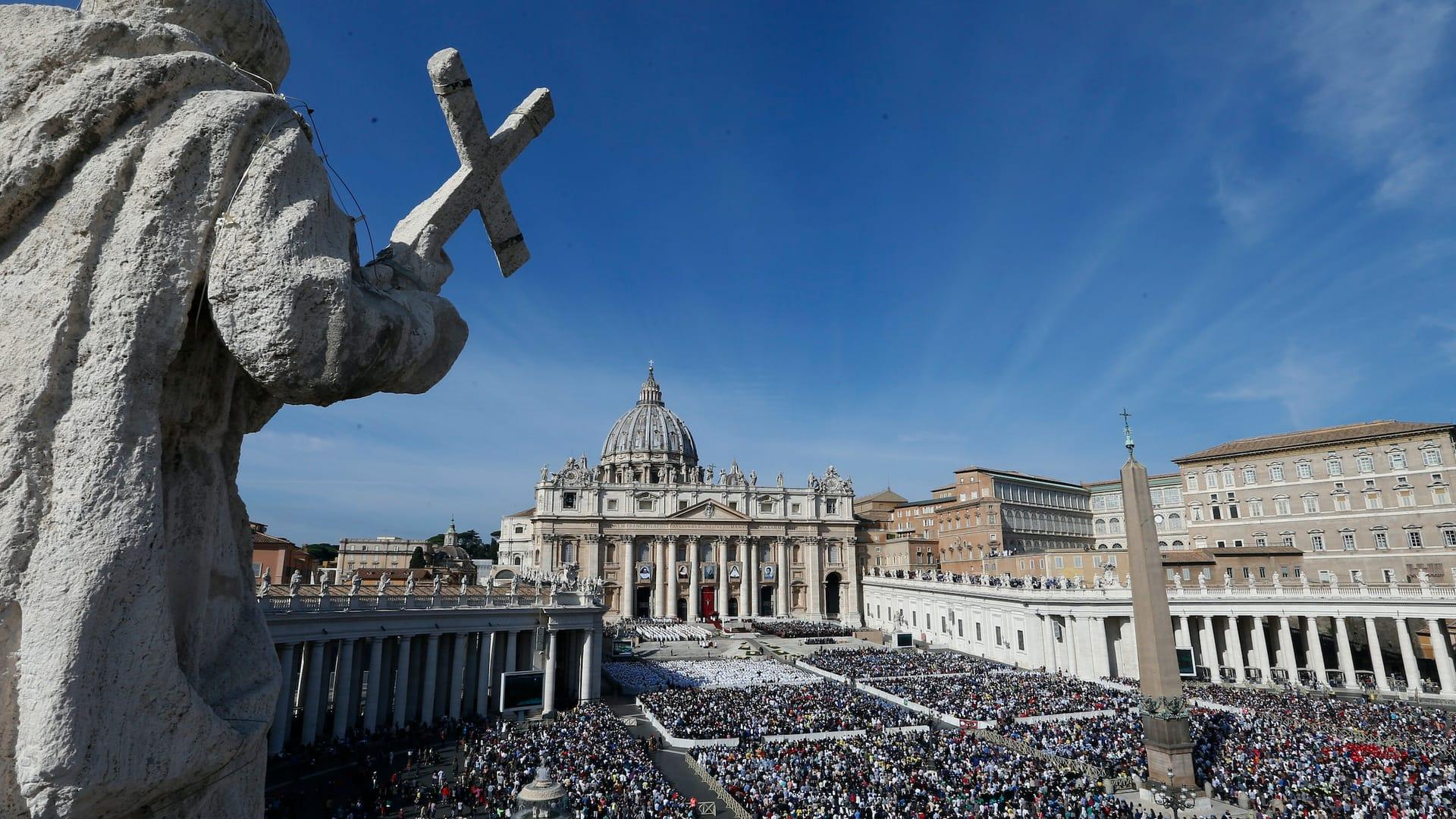
Young Saints – A Pilgrimage in Rome during the Jubilee of Youth
Young Saints - A pilgrimage in Rome Youth Jubilee [...]

The story of CCO’s founding mission statement
A Mission is Born It’s been more than three [...]
A Mission for Generations to Come
A Mission for Generations to Come After more than [...]

Blessed Carlo in Ontario
Blessed Carlo Acutis in Ontario Following the 2024 [...]